
Setting up a Birth Room

Setting up a Birth Room Setting up a birth room in a midwifery business isn’t just about where the bed should go and birth tub. Each setting has its own unique challenges. We want the space to be pretty and functional at the same time. The size of the room, door ways, windows, layout is just one piece of the puzzle. There are times when you have no control of layout like in a home birth. You are coming into a woman’s space and need to be more flexible. I like to do 36wk gestation home visit to help me understand her home layout. Basements are harder to do water births with emptying the tub outside (need pump available versus self draining). Main level births are my preference if there is an emergency, EMS can access mother and baby easier. Are there dogs, parking restriction, Amish with no electricity? There are many things going through a midwife’s mind to make a safe birth environment. Hospital Regulations and Infection Control Hospital regulations and infection control sometimes dictate what type of furniture, accessibility to tub, bed, and bathroom is present. City regulations may require additional building support under tub. I had a city require drains placed in floor near tub if over flow was a potential. I didn’t argue, because I knew it was a challenge to get birth center going in this area. You pick which inspection or regulation requirements to battle. Is there a hospital bed or standard bed? Do you get a queen or king sized bed? Protective mattress cover that can easily be cleaned between patients. What birth supplies should be present behind pictures and in shelves? What can be kept in room, locked up, and refrigerated? Home Birth Midwives Needs to Pack Bags that have Everything they Need. This settings needs to be extra prepared, because there isn’t a pharmacy to get back up medications, another birth room to grab supplies from, or additional staff if emergency is occurring. Having a reliable birth assistant on call is very important versus an extra nurse on hospital unit coming into room for delivery time to assist with newborn care. Supplies needs to be sterilized, kept for long term durable packaging, and easily available if rushing into home for precipitous delivery. I kept basic supplies in one section if birth was happening fast and I was only by myself (assistant hasn’t arrived yet). Making sure inventory is checked out after every birth and once a month see how close medications are to expiring and use closest expiration first. Being resourceful of inventory when it is your own midwife business purchasing supplies. Hospital midwives tend to not realize back drop costs of equipment and supplies when their salary comes each week whether one pad is used or twenty. Privacy Protection is so Important. Is bathroom or tub separate from birth room? Even the simple thought of which way door opens to birth room is needed to be discussed. Floor plans from an architect are helpful. I loved playing around with free online programs like https://floorplancreator.net/ . Being able to see how much space their “really is” for me, family, and furniture in the birth rooms. In my birth center, made sure there was a sink and shelf to set supplies (customized dresser) next to bed and birth tub for easy clean up and grabbing things. Handicapped accessibility of all birth rooms for visitors and patients we serve. Hand rails for getting in and out of birth tub were really nice when a women had her baby’s head out and a shoulder dystocia was present in the tub. Having Access on Both Sides of Bed is Really Helpful In a home setting, there is less flexibility to birth room layout and that needs to be taken into account when transport and safety protocols are being made for emergency situations. Good lighting (I placed dimming switches in my birth rooms) is very important for assessing vaginal bleeding during labor and postpartum, newborn assessment, charting paperwork, and cleaning up messes. I had handheld lights near my charting and birth supplies if the room was dark. I have separate lighting system directly over the birth tubs and the main room with bed. Everyone’s favorite part is picking color scheme and the decorations that are calming to mother and family, but that is just a small part of overall midwife business planning. Having safety and home like environments are vital to a successful practice.
Self-care and Prosperity

Self-care and Prosperity As Midwives, our Primary Task is to Provide “CARE” Services to our Patients. Self-care and prosperity are indeed our responsibility to make sure that our patients are well taken care of and receive sufficient attention in providing for their needs. However, while doing so, we should also consider paying attention to our own needs as an individual. Self-care is a popular word that has been trending in various articles and online publications, even topping the Google Search engine tab in previous years. It’s also been the subject of self-empowerment, especially amongst women, in politically overturned times. Yet, it feels overused to the point where many of us have grown tired of hearing it. Many failed to realize that self-care can be a strategic and integral part of modern business plans. Adding self-care approaches can help improve productivity, teamwork, and innovation. Midwives who pay attention to their own physical and emotional health are better able to handle the challenges of supporting their patients. They adapt to changes, build strong relationships, and recover from setbacks. Here are some suggestions for personalizing your self-care strategy. While self-care once seemed like a foreign concept, there is increasing understanding within the healthcare industry that not only it is beneficial for our personal health, but by taking time for ourselves we also become better midwives. 1. Wellness and mind-body practice is a health path forward. As we struggle to “do it all”, how much does all facets of our health suffer? What are our daily practices to protect our body, mind and spirit? According to a study by the National Institutes of Health, individuals who engaged in a meditation retreat were assessed before and after. Active participants reported a decrease in anxiety and depression as well as an increase in mindfulness. The practice of mindfulness is as simple as maintaining a moment-by-moment awareness of our thoughts through a gentle, nurturing lens. “The best investment you can make is always in yourself. It’s always worth it. 2. Don’t we all deserve that level of self-care? The positive effects of meditative practices on mental fitness, autonomic self-regulation and inflammatory status are believed to be related. 3. Benefits of hitting the pause button. In our personal quest to achieve “success,” we can lose the internal cues that are foundational to our connection with ourselves and we diminish our ability to self-regulate (control emotions, concentration, and joy). With consistent and persistent practice, we can achieve a powerful ability to decrease anxiety, increase joy and fulfillment, increase performance capabilities and produce a more mindful state. At the root of all these attributes is self-regulation. Simple yet powerful effects of breath play an essential role to the fundamentals of health, well-being, healing and human performance. Specific breathing techniques can have a tremendous impact on decreasing stress and other inflammatory states, enhancing brainpower and balancing emotions. Sharpening this internal regulation tool will assist to achieve deeper sleep and improve digestive issues while resisting “thought clutter.” Further, specific breathing practices will enrich the connection to yourself (self-awareness, self-esteem, etc.) as well as deepen your connection to a powerful reserve of energy that will support a higher level of health, healing, wellness and performance in all areas of your life. Consider how many times a day you actually stop all activity to simply “be,” without motion or in the state of doing? Experts agree that the longer we stay in motion of “doing”, the less healthy we are “being.” Yes, it stands in direct contrast to satisfying our billable hour requirements and project lists, but, in the long-term, we will benefit from a more efficient and productive work schedule. Try it for yourself. 4. Can you hear you now: self-talk All day, every day, we are speaking (consciously or subconsciously) with ourselves and affirming information about ourselves, in an endless loop. What messages are we sending to ourselves? Positive or negative? If we speak-emotionally charged messages to ourselves repeatedly, they will eventually become our beliefs. These beliefs translate into a powerful feeling, a feeling that cultivates action (or in-action). The action we take on a consistent basis manifests our reality. 5. Attitude of Gratitude. You may have heard that spending a few minutes a day being grateful for all of the things your life, your family and friends and your health can produce positive health effects. Some individuals find maintaining a Gratitude Journal a useful blue print to positive health, especially when life does not progress in the way we expect. This one is easy and very powerful. 6. A continual work in progress. Reaching a state of ideal health – body, mind, spirit, is not a destination, usually due to so many variables in our lives over which we have little or no control. Yet, we should take hold of the things we can to realize great health effects, manage stress more efficiently and, overall, experience a more positive life experience. Taking small, simple steps every day and even during the day is the most direct path to increase overall wellness. Twenty minutes of practice daily will help us begin or continue on our path to health, healing and wellness. Why does it often seem so easy to care for others while we forget taking care of ourselves? We should always remember that in order to achieve our goals, we must stay healthy and happy. The vitality that we provide others must always start within ourselves. GREAT PREVENTING BURNOUT COURSE AVAILABLE: https://midwiferybusinessconsultation.teachable.com/p/how-to-prevent-and-recover-from-midwifery-burnout Related articles: https://attorneyatlawmagazine.com/self-care-build-prosperous-business
Scope of a Nurse Midwife

Scope of a Nurse Midwife
Scarcity Versus Abundance Mindset
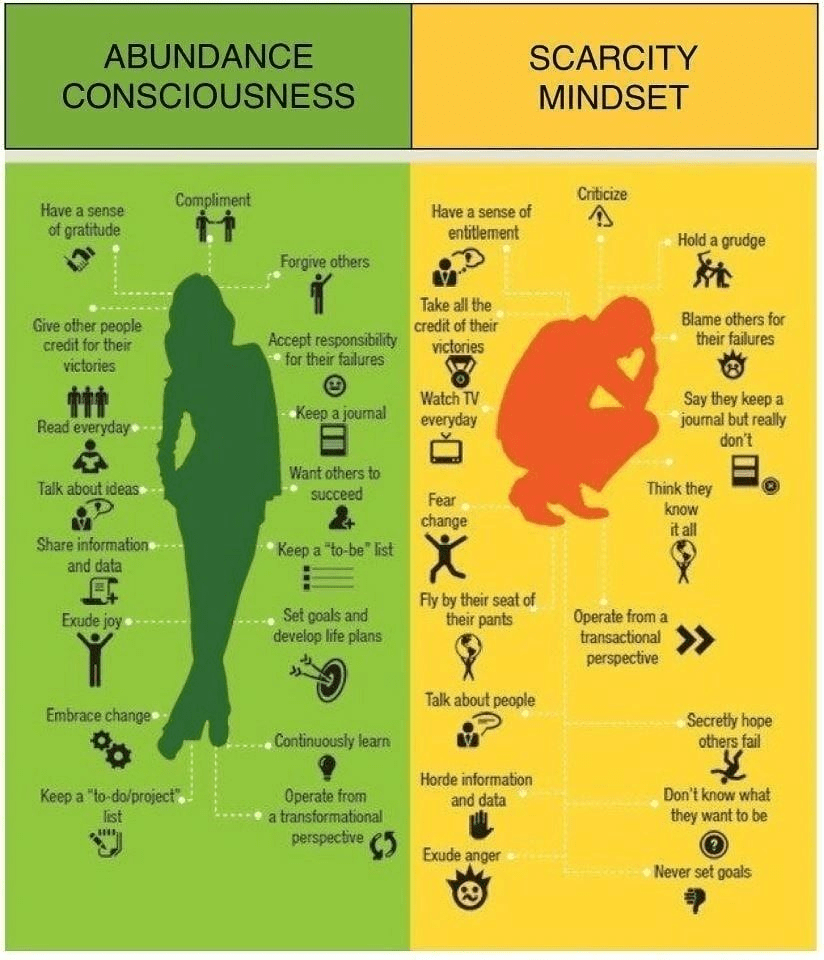
Scarcity Versus Abundance Mindset A scarcity mindset versus abundance mindset are two contrasting perspectives that individuals may hold regarding resources, opportunities, and life in general. These mindsets can significantly impact a person’s approach to challenges, success, and overall well-being. If you think you are poor and won’t be successful in life, you are right. If you think that nothing can stop you and anything is possible in life, you are right as well. As midwives, we may think that United States maternity system is against midwifery and too tough to practice here. That is your limited belief. I see the midwifery minority as being less competition and HUGE demands for my midwifery services. Do you look at your glass half empty or half full? It is the same glass, but your minds PERCEPTION of life and situations determines how “good or bad things are.” We create our own realities. Your weight, your professional position, and financial capabilities were created by our conscious and subconscious thought processes. When a stressful situation occurs, do you get nervous and avoid the challenge? Do you love the fear and jump at the opportunity to learn something new? Look at your Personal Goals, Values, and Wisdom Are you where you want to be or are there things in life missing? Are you the type of midwife you want to be? Are you working for yourself in a dream business? Positive attitudes and affirmations really change our opportunities in life. If people walk around complaining all the time and fearful of “what ifs,” negative energy and circumstances will find you. If you want more money, instead of budgeting, use your amazing creativity and find other ways to make funds to pay of debt and enjoy hobbies you love. Gratitude journals, finding the best in any situation, and really appreciate the little things in life will really help your joy and prosperity in life. Money doesn’t make a person happy. A positive mental state makes people happy. What do you want to accomplish in life? How do you view your life situations? Goals and rewards for accomplishing them really show progress to your end results as being possible. You want a new car, visualize and plan to how that car will be in your driveway. Pick up extra shifts. Look at your financial statements and find holes where money is being lost for silly things like subscriptions no longer using. Come into work with a positive mindset and ways to create value for the organization or your business. Those additional gestures will get you recognized, rewarded, and accelerated up the promotion ladder. Family, friends, and co-workers will want to be around you more and wonder what supplement you are taking to make you so “high on life.” Scarcity mindset feeds fear and shrinks the minds potential. Abundance makes people look at the world with a lens of unlimited opportunities. The creativity part of the brain expands and finds opportunities to improve processes, fix problems, and contribute to the great good of society. The more applied knowledge and value created, the more opportunities will be presented to you in life. I have a perfect example, I used to live in fear and worry all the time. I have worked really hard to keep my anxiety in check and avoid tough conversations. As I shifted my mind more towards abundance and possibilities, I didn’t fear the unknown, I found opportunities with value needed to midwives and business support, and now really living my dream of helping women in the masses with supporting their midwifery practices. You can do ANYTHING you want and dream. Find the barriers and overcome them. Life is too short to be stressing over the little things. Read everyday. Continue to stimulate your brain and challenge your thought processes. `Be humble and understanding to your fellow man. We all have good intentions and want to make this place better for the next generation. I am a person that likes control and would get so frustrated when I couldn’t control health care systems, insurance reimbursement rates being less for midwives than doctors, and midwives not getting the local and national recognition they deserve. I have learned to focus on what I can control. I can control my voice, my knowledge being spread to the masses, and advocating for normal birth one person at a time. By improving business knowledge to midwives, I am able to help make professional careers longer, more fulfilling, more profitable, and be able to take are of women better. What is your superpower? How do you look at the world around? I challenge you today to look closely at the world and how your mind is processing that information. Are you focusing on negative, poor me mentality or are you going to face the challenges of each day and triumph over them?
Scaling Your Midwifery Business: When and How to Expand Your Services or Hire Additional Staff

As a midwife, you’re already playing a crucial role in the care and support of families during one of the most significant times of their lives. Your midwifery practice may have started small, but as demand increases, you might find yourself wondering when the right time is to expand your services or hire additional staff. Scaling your midwifery business is not only about increasing your revenue—it’s about ensuring your clients receive the best care possible while maintaining your own well-being. In this post, we will explore when and how to scale your midwifery practice, whether it’s adding new services, hiring more staff, or expanding your practice’s reach. 1. Signs It’s Time to Scale Your Midwifery Practice Recognizing when it’s time to scale your midwifery practice is essential to avoid burnout and ensure that you continue to provide exceptional care. Here are some key signs that it might be time to expand your services or bring on additional help: Increased Demand for Your Services: If you find that you’re consistently booking out months in advance, you may have hit your capacity for the number of clients you can safely care for. This is a strong indicator that your practice is ready for growth. Limited Time for Personal Life: Midwifery is a demanding job that requires a lot of time and energy. If you are feeling overwhelmed, stressed, or unable to balance your professional and personal life, this is a clear signal that scaling is necessary. Client Waitlists: If prospective clients are having to wait a long time to be seen or receive care, you’re potentially losing out on valuable opportunities and hurting your business’s reputation. Expanding your practice can alleviate this bottleneck. High Quality of Care is at Risk: As your caseload increases, it may become more challenging to maintain the high standard of care that your clients have come to expect. If this is happening, it’s important to assess how you can scale in a way that preserves care quality. 2. Deciding Whether to Add Services or Hire Staff When the decision is made to scale, you’ll need to consider how to best do it. The two primary options for scaling a midwifery business are adding services or hiring additional staff. Adding New Services Expanding your service offerings can be a great way to increase the scope of your midwifery practice while meeting the changing needs of your clients. Here are some ideas for services to consider: Prenatal Yoga and Fitness Classes: Offering prenatal classes that focus on fitness and relaxation can attract a broader clientele and help mothers-to-be prepare for childbirth in a holistic manner. Lactation Consulting: If you’re certified as a lactation consultant, adding this service will be a natural extension of your practice and will help new parents navigate breastfeeding. Postpartum Care and Doula Services: Offering postpartum visits, including emotional support and baby care, or expanding your practice to include doula services, can complement your current offerings. Home Birth or Water Birth Services: If you currently only offer hospital or birth center deliveries, adding home birth or water birth services could attract new clients seeking a more natural birthing experience. Hiring Additional Staff If you find yourself overwhelmed with the demands of your practice, it might be time to hire additional staff. Expanding your team will allow you to take on more clients, reduce your workload, and maintain a higher quality of care. Hiring Other Midwives: If you’re consistently turning away clients or unable to provide timely care, hiring another midwife can help balance the caseload. Ensure that the new hire shares your values and approach to care, as this will be crucial for maintaining consistency and trust with your clients. Support Staff: Consider hiring administrative staff to help with scheduling, billing, and communication. This can free up your time to focus on providing direct care, rather than getting bogged down by paperwork. Nurses or Medical Assistants: If you have the resources, bringing on a nurse or medical assistant to assist with prenatal checkups, blood pressure monitoring, and other clinical tasks can ease your workload and help streamline operations. 3. Strategic Considerations for Scaling Before you hire additional staff or expand services, it’s essential to take a strategic approach to scaling your midwifery practice. Budget and Finances: Scaling your business comes with costs—whether it’s hiring new staff, renting more space, or purchasing new equipment. Assess your financial situation to determine if your business can sustain these costs. Prepare a solid financial plan for scaling to ensure profitability. Legal and Insurance Considerations: Adding services or hiring new staff may require legal and insurance adjustments. Consult with a lawyer to ensure that your contracts and liability insurance are updated and cover the new scope of your practice. Technology and Systems: As your practice grows, it’s important to implement systems to keep things organized. Invest in practice management software to streamline scheduling, client communication, and billing. This can significantly reduce administrative burdens. Maintaining Care Quality: As your team grows, the challenge of maintaining consistent, high-quality care becomes even more important. Train new staff thoroughly and set clear expectations for how care should be delivered. 4. How to Effectively Hire and Onboard New Staff When scaling your practice, hiring the right people is essential to maintaining the quality of care and ensuring a smooth expansion. Here’s how to do it effectively: Define Roles Clearly: When hiring, make sure that job descriptions and roles are clearly defined. Understand what skills and qualifications are necessary for each position. Prioritize Cultural Fit: In a small practice, it’s especially important that new hires align with your values and work well with your existing team. Take time to assess cultural fit as well as technical qualifications. Offer Competitive Compensation: To attract high-quality candidates, ensure your compensation packages are competitive. Consider offering benefits such as health insurance, paid time off, and professional development opportunities. Create an Onboarding Plan: A structured onboarding process is vital to ensure that new hires understand your practice’s operations, client care philosophy,
Risk Reduction Measures for Midwives

Risk reduction measures are essential in midwifery to enhance patient safety and minimize potential complications during pregnancy, childbirth, and postpartum care. Midwives play a critical role in providing quality care, and implementing risk reduction strategies is crucial to ensuring positive outcomes for expectant mothers and infants. Risk Reduction Measures for Midwifery: Comprehensive Assessment: Conduct thorough and ongoing assessments of expectant mothers to identify potential risk factors, medical history, and any signs of complications. This information informs the care plan. Risk Stratification: Stratify patients based on their level of risk. Identify low-risk pregnancies that are suitable for midwifery care and refer high-risk cases to obstetricians or specialists. Regular Prenatal Care: Ensure that expectant mothers receive regular prenatal care, including appropriate screenings, ultrasounds, and diagnostic tests to monitor fetal development and maternal health. Education and Counseling: Provide comprehensive education and counseling to expectant mothers on topics like nutrition, exercise, prenatal vitamins, and lifestyle factors that can impact pregnancy outcomes. Shared Decision-Making: Engage in shared decision-making with patients, involving them in the development of care plans and making informed choices regarding their pregnancy and birth preferences. Continuous Monitoring During Labor: Maintain continuous monitoring of the mother and baby during labor to promptly identify any deviations from the expected course and take necessary actions. Emergency Preparedness: Develop and practice emergency response protocols for unexpected complications during childbirth, such as postpartum hemorrhage or fetal distress. Documentation and Records: Maintain accurate and detailed patient records, documenting assessments, interventions, and outcomes. Proper documentation is essential for continuity of care and legal protection. Collaboration with Obstetricians: Foster a collaborative relationship with obstetricians and other healthcare providers to ensure timely consultation and transfer of care when high-risk situations arise. Continuous Professional Development: Stay up-to-date with the latest evidence-based guidelines and best practices through continuous professional development and education. Quality Assurance and Peer Review: Participate in peer review processes and quality assurance programs to assess and improve the quality of care provided by midwives. Cultural Competence: Ensure that care is culturally competent by respecting and understanding the diverse backgrounds and beliefs of patients. Informed Consent: Obtain informed consent from patients before any medical procedures or interventions, ensuring they understand the risks and benefits. Routine Screening for Mental Health: Routinely screen for mental health issues during prenatal and postpartum visits and provide appropriate support and referrals when needed. Medication Management: Administer medications judiciously and follow safe medication management practices, including double-checking drug doses and routes. Infection Control: Maintain strict infection control measures, especially during labor and delivery, to reduce the risk of maternal and neonatal infections. Postpartum Care: Provide comprehensive postpartum care, including monitoring for postpartum complications, mental health support, and breastfeeding assistance. Emergency Transport Plan: Develop and communicate a clear emergency transport plan to ensure rapid access to advanced medical care when necessary. Risk Communication:Effectively communicate risks and potential complications to patients and their families while offering emotional support and reassurance. Peer Support and Debriefing: Establish a system for peer support and debriefing after challenging cases or adverse events to promote emotional well-being among midwives. By implementing these risk reduction measures, midwives can contribute to safer pregnancies, deliveries, and postpartum care for expectant mothers and their infants while providing high-quality, evidence-based care that aligns with the principles of midwifery practice.
Rich Dad, Poor Dad: Valuable Book for Midwife Business Start Ups

Rich Dad, Poor Dad: Valuable Book for Midwife Business Start Ups There is a series of phenomenal books out there. Rich Dad Poor Dad by Robert Kirosaki really points out all the flaws with our financial system in regards to teaching kids nothing about money, government laws that benefit the rich, and fundamental gaps in economical myth holding people to each class structure created by society. Rich are rich, because of how they think. We are ingrained into economical thought processes from our parents. Middle class have a classic way of looking at money. Rich teach their children completeyl different about money and how to create financial freedom. I want midwives to create financial freedom. With no financial barriers to your business, the true mission of purpose can shine. There isn’t pressure of creating a birth center that has to take too many patients to pay the bills. It can truly be what is best for the community. Resources, best products, and business structure can be created from wealth knowledge. Passive income (money coming into your pocket whether you are awake, sleeping, sick, or on vacation) becomes your main sources of funds. Midwifery can become a hobby, past time, true passion versus biweekly paycheck to pay your bills. Think of how many women and families we could truly serve IF MONEY WERE NO OBJECT. What would your goals for your midwifery practice if that barrier were present??? Think how much happier you would be and community changes you could create. Rich Dad Poor Dad was the first book of Robert Kiyosaki’s series that opened my eyes to working smart, not hard anymore. I was tired of putting in long hours, missing my family, and having midwifery not be practiced how I envisioned it due to initially perceived barriers of business overhead costs. I learned how to create business systems that supported each other (non profit Amish birth center paid for by Amish gleaning services, bakeries, and Farmer’s Markets). When I looked at barriers to creating a business, it used to be the money (any good business plan will get you the funds from investors, supporters, or community). Now it is time (most valuable asset anyone has). There are only so many hours in the day and how can I get connected with the right people to make these dreams and goal happen. Rich Dad Poor Dad is a 1997 book written by Robert Kiyosaki and Sharon Lechter. It advocates the importance of financial literacy (financial education), financial independence and building wealth through investing in assets, real estate investing, starting and owning businesses, as well as increasing one’s financial intelligence (financial IQ) to improve one’s business and financial aptitude. Rich Dad Poor Dad is written in the style of a set of parables, ostensibly based on Kiyosaki’s life.
Revolutionize Any Relationship

Revolutionize Any Relationship How to Revolutionize Any Relationship by Tapping Into Your Emotional Fingerprint™ Woody Woodward was a personal business mentor I hired years ago to help me get my life and business to the levels I never dreamed could be possible. His knowledge, wisdom, and guidance can be applied to any birth worker wanting to break their personal glass ceiling effect held in your mind. One of his best books, “Emotional Fingerprint,” has really opened my eyes to the “Platinum Rule.” It is the next level up from the “Golden Rule” where you do to others how you would like to be treated. The “Platinum Rule” is do onto others how they would like to be treated! There are great tools to learn people internal drives and motivations after talking with them for a few minutes. You can present a win-win situation proposal that meets their needs, not just your needs and hope that aligns with theirs. By providing value that fulfills their unique internal driving forces, value will always be achieved. I have made so many great deals and opportunities happen from following Woody’s amazing advice. “Your successes and failures in life, relationships and business are determined based on how you defend and support your Emotional Fingerprint,” says serial entrepreneur, film maker, success strategist, nine-time author Woody Woodward, whose newest book, Your Emotional Fingerprint, 7 Secrets That Will Transform Your Life, is being published today. “Every one of us has a unique navigation system which affects how we deal with people, how we respond in intimate relationships, how we value friendships and how we pull through challenging and tough situations.” This unique navigation system has been identified by world-renowned thought leader, speaker and seminar presenter Woody Woodward as your Emotional Fingerprint. In Woody Woodward’s newest book, Your Emotional Fingerprint, 7 Secrets That Will Transform Your Life, he illustrates the Five Validations that can transform any relationship. The Five Validations are: 1. Recognition 2. Respect 3. Acceptance 4. Appreciation 5. Praise Recognition: Bill Bartmann was homeless at 14, dropped out of high school, and was in a gang. When he was 17 he worked in a hotel and a woman in management kept calling him “bright young kid.” After a month or two of this he inquired why she called him that. She said that was what the owner of the hotel put on his application after his interview. This recognition from someone he admired as a businessman completely changed his outlook on himself. It inspired him to get his GED, put himself through college and law school, and eventually build a billion dollar empire. At one point he was ranked as one of the 25 Richest People in America by Forbes. Bill said, “None of this would have happened if the owner of the hotel did not recognize me as the ‘bright young kid.’” The recognition you give can have a lasting impression on someone’s Emotional Fingerprint. Respect: You can have unconditional love for anyone but you cannot respect everyone. Respect must be earned. Find something in the people you know and express your respect for them. It could be something as simple as their commitment to a workout routine, a hobby, or talent. Let them know you respect their decisions and opinions. Giving respect will go a long way when validating what makes someone feel important. Acceptance: A little boy was telling his Grandma how “everything” was going wrong – school, family problems, severe health problems, and everything else. Meanwhile, Grandma was baking a cake. She asked the child if he would like a snack, which of course he did. “Here. Have some cooking oil,” she said. “Yuck,” said the boy. “How about a couple of raw eggs?” “Gross, Grandma.” “Would you like some flour then? Or maybe baking soda?” “Grandma, those are all yucky!” To which the Grandma replied, “Yes, all those things seem bad all by themselves. But when they are put together in the right way, they make a wonderfully delicious cake!” Appreciation: As his car pulled up to the drive-thru window Jeff Sinclair asked for the bill for the car behind him. The cashier seemed stunned at first but gave him the amount and he paid it. This train action of appreciation went on for 74 cars in a row. Even the local radio show was reporting on it. “We live in an appreciation deficient society. Imagine how your friends and loved ones would feel if they knew how much you appreciated them,” he said. Praise: Master illusionist and magician Harry Houdini spent a lifetime debunking psychics, mind readers and scam artists. He met every foe with enthusiasm and within days copied their tricks or proved them wrong. “So, why do we think that our friends, family, co-workers, customers or spouse know how we feel about them? It is not enough to think about them. We must take action,” says Woodward. “As we do these five validations it has a direct impact on someone’s Emotional Fingerprint.” To discover your Emotional Fingerprint for free visit http://www.MyEmotionalFingerprint.com. To see inspiring videos of these applications click on the video tab. About Woody Woodward Woody Woodward is a success strategist who specializes in achieving exceptional results. As an entrepreneur for more than 20 years, he has used the principles taught in his book Your Emotional Fingerprint, 7 Secrets That Will Transform Your Life to negotiate deals with major corporations, including NASCAR, the NBA, the NFL, Warner Music, Sony, Disney, and BMG Music. The Emotional Fingerprint was chosen as one of the leading techniques to be presented to the United Nations to assist them in reaching their millennial goals. For information about Woody Woodward’s speaking availability, strategy session or consulting please visit http://www.MeetWoody.com http://www.MyEmotionalFingerprint.com Contact Woody Woodward Phone 951-973-3408 Email sbwwoody@msn.com SOURCE Woody Woodward
Renting, Buying, or Building a Birth Center

Starting a Birth Center Practice Thinking of starting a birth center? Should I remodel an older building how I want it to save costs? Or should I rent a small space for a while until we save enough money for our final location? Each midwife’s business plan will help determine which option makes the most sense for you. It really depends on your start-up capital funding, long-term goals of practice, and services you will be offering. I thought it would be helpful to a common breakdown analysis I do with consulting clients when deciding what is best for them. Common questions I ask that you can directly think about when planning your birth center: What Services Will You Offer? If you want to just do births and keep things simpler, it might make more sense to have a smaller space leased with inflatable pools for the waterbirth experience. What are your state regulations like? Some states don’t allow inflatable tubs and need a more concrete setup facility versus just a home turned into a birthing center. Some states are better to build than try to remodel a building to very specific handicap-accessible dimensions of birth rooms and their bathrooms. Some states don’t even have any birth center regulations and midwives look more towards AABC (American Association of Birth Centers) and CABC (Commission for the Accreditation of Birth Centers) for birth center layout and standard support. How much money to start this birth center practice? When of the biggest questions I ask that will lead to most of the decisions for birth center purchase, build, or rent discussion is, “How much money do you have to start this practice?” Many midwives start out small using their own working capital to start the birth center. They can’t financially invest in a down payment to build a center or purchase established space that needs to be remodeled. Those midwives tend to lease a small space for a prenatal room and have a birth room while starting out with the intention of purchasing their final location in 3-5 years once funds are available and birth volume increases. This is an option, but a harder path to pick. As the practice gets too busy too fast, there is pressure to find another location and pay more money than necessary for the remodeling costs. Remodeling a building is cheaper than building the right space initially. Long-term maintenance and structural layout challenges with expansion and birth room layouts tend to make remodeling more expensive. If you can get a bank loan, private investors, or business partners that will contribute more to financial start-up capital while you as the midwife contribute more sweat equity to the project, building a new facility is the nicer path to go. I would like more midwives to think more about the direction of the lease to own a building. It is the perfect win-win situation for lower start-up fund birth center projects while still building up equity in a long-term building for use. Pick a location to lease that the current owner would like to sell in the future. Motivated sellers definitely help to think creatively of lease-to-own options. I personally did this with my birth center and it worked out perfectly. There was a chiropractor who had his prior location for sale for over 2 years a couple of blocks from a local hospital with Labor and Delivery services in my husband’s hometown. He owned the building free and clear and was paying for overhead costs on the building while it was sitting vacant. I created a win-win situation proposal. I gave him his asking price for the building but with my TERMS on the purchase. I have done years of real estate investing and knew some great things to propose to make it a great deal long term. I offered him his purchase price but would close on the building in 3 years versus now. We would lease the building first three years while the portion of rent was going towards the purchase price, do our birth center room remodeling, and provide a very minimal down payment for his commitment to the deal. It was a pretty easy conversation since this building had lost him money for the last 2yrs and a unique layout for a traditional business (perfect for what I wanted). SBA loan for remodeling of two birth centers and start-up costs. Paid our rent monthly and closed on the building in three years bringing no funds to closing since my rent was counting towards lowering the costs of the building purchase. It was amazing to know this was our long-term location, with minimal start-up costs, and purchase building with no money required at closing! I tell you this story to inspire creativity and always look at win-win situations with people. This gentleman needed to sell his building and I wanted his space. Whether you look at renting, building, or remodeling an existing building, take the time to look at surrounding neighborhoods, short and long-term goals for practice, initial funds available for starting a building, and the cost of existing buildings in your area. Right now, there are lots of commercial properties hurting for leasing tenants and selling their buildings. I would bet in most towns, it would make more financial sense to negotiate great deals like the lease to own or purchase at a discounted rate commercial property that is zoned to allow a birth center facility. There is so much opportunity out there for you to start a birth center and don’t necessarily have to build your dream location! Enroll in our teachable course on the Birth Center Basics to learn more
Relationship Value has an Infinite Return on Investment

Return on Investment In a world often driven by tangible gains and immediate returns, it’s essential to recognize the profound and lasting impact that building meaningful relationships can have on our lives. Relationships, whether personal or professional, are investments with returns that are not only immeasurable but often infinite. This blog post explores the concept that the value of relationships goes far beyond what can be quantified, offering rewards that can last a lifetime and beyond. 1. Support and Emotional Well-being One of the most significant returns on investment in relationships is the emotional support they provide. Trusted friends, family members, and mentors can be pillars of strength during challenging times. These relationships offer solace, comfort, and a sense of belonging, contributing immeasurably to your emotional well-being. 2. Personal Growth and Development Meaningful relationships challenge and inspire personal growth. They expose you to diverse perspectives, ideas, and experiences, helping you evolve into a more well-rounded individual. In these relationships, you can learn from others, discover your strengths and weaknesses, and strive for continuous self-improvement. 3. Professional Success In the professional realm, building and nurturing relationships can lead to extraordinary opportunities. Networking and forming connections within your industry or field can open doors to career advancements, collaborations, and mentorships. The knowledge and guidance gained from these relationships can be invaluable in achieving your goals. 4. Unconditional Support True relationships often come with an unwavering commitment to your well-being and success. Friends and loved ones who genuinely care about your happiness and fulfillment will stand by your side through thick and thin. This support is a priceless asset that can never be measured in monetary terms. 5. Legacy and Impact The value of relationships extends beyond your lifetime. The impact you make on others, and the positive influence you have on their lives, can create a lasting legacy. The knowledge, wisdom, and inspiration you share with others can continue to shape the world long after you’re gone. 6. The Ripple Effect Every meaningful relationship you cultivate has the potential to create a ripple effect. When you positively impact one person’s life, they, in turn, may go on to inspire and support others. This chain reaction multiplies the value of your initial investment in that relationship, extending its reach far beyond your immediate circle. 7. Happiness and Well-being Research consistently shows that strong social connections are closely linked to happiness and overall well-being. The joy, laughter, and shared experiences that come from nurturing relationships are immeasurable in their positive effects on your quality of life. 8. Lifelong Learning Through your relationships, you gain access to a vast pool of knowledge and experiences. Whether it’s learning from the wisdom of older generations, gaining insights from peers, or inspiring the next generation, the learning opportunities provided by relationships are limitless. In conclusion, the value of relationships transcends conventional measures of return on investment. The bonds we forge with others enrich our lives in countless ways, offering support, personal growth, and professional success that extend far beyond what can be quantified. By investing time, effort, and care into building and nurturing these connections, you are not only enhancing your own life but contributing to a world where the returns on the investment in relationships are infinite.